


From Humble Beginnings to a Hockey Legend
Legends aren’t always born with greatness, sometimes they simply refuse to stop chasing it. Born March 31, 1928, in Floral, Saskatchewan—and swiftly moved to Saskatoon just nine days after his birth—Gordon “Gordie” Howe’s household struggled to make ends meet. Born one of nine, his father worked as a general labourer, while his mother Katherine stayed home and managed the household during the Great Depression. In his autobiography, Mr. Hockey: My Story, Gordie recounts frequent illness, malnutrition, and difficulties in school due to undiagnosed dyslexia, earning him the cruel nickname “doughhead.” Then one day, out of a burlap sack bought from a neighbour, emerged a pair of rusty skates—and from a pair of rusty skates and a dream, emerged a legend.
Gordie Howe’s career was marked by extraordinary achievement. After playing junior hockey throughout his childhood and attending a Red Wings training camp in 1943, Howe joined the Omaha Knights in 1945 before making his NHL debut with the Detroit Red Wings in 1946. He went on to win four Stanley Cups, earn six MVP awards, and score 801 NHL goals. Even surpassing the famed Maurice “The Rocket” Richard’s record on November 10, 1963, when he scored his 545th goal–further cementing his legacy as one of hockey’s greatest players of all time. After a remarkable five decades on ice, Gordie retired at age 52. His legacy has inspired generations of hockey players, earning him the fitting nickname “Mr. Hockey.”
The Need for a New Connection
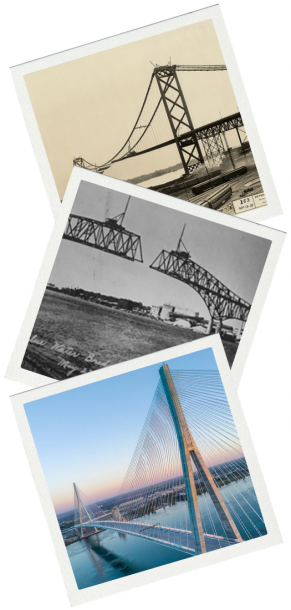
For decades, traffic between Windsor and Detroit—which handles roughly 30% of bilateral truck trade and an estimated $300 million in goods each day—has depended heavily on the aging Ambassador Bridge. This has created significant challenges for businesses and commuters alike. Built in 1929, the bridge requires ongoing maintenance, and rising toll costs have led many to take much longer routes, such as the Blue Water Bridge in Sarnia, Ontario, in an effort to reduce their expenses. As a result, several studies have been carried out, examining the costs and feasibility of constructing a new bridge. These studies have been key in helping secure the approvals needed to move forward with the development of a new crossing. One which has been meticulously designed to increase capacity, improve efficiency, and strengthen the vital Canada-U.S. trade corridor.
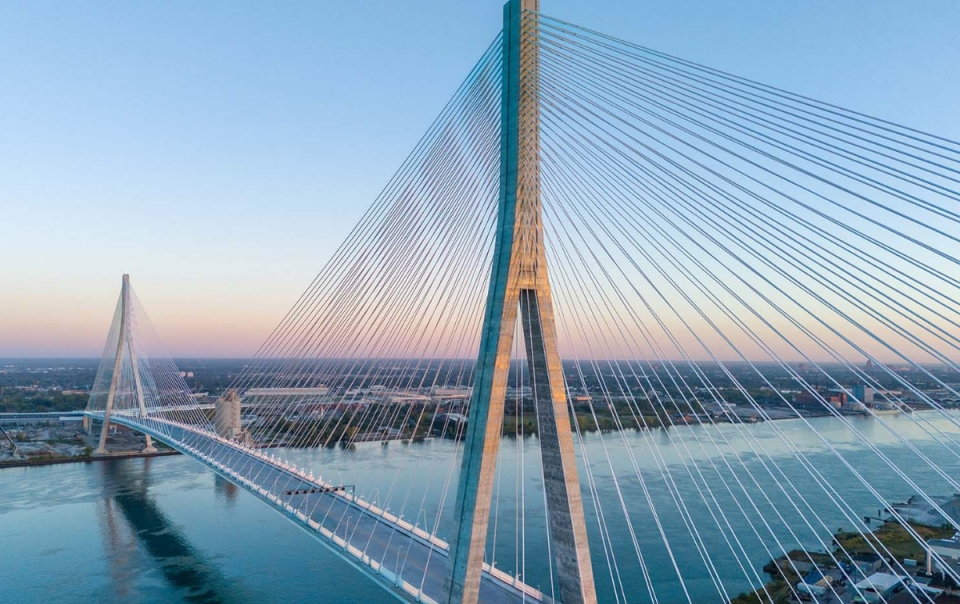
The new project became Gordie Howe’s namesake on May 14th, 2015, to honour the hockey star’s legacy of bringing Canadians and Americans together. Workers from both sides of the border began its construction in 2018, and “after 25 years of planning, seven years of construction and months of delays” the bridge officially opened to vehicle traffic on July 27, 2026 (Hughes, 2026). This historic feat of engineering—the longest cable-stayed span in North America–features six lanes and offers a direct connection between Ontario’s Highway 401 and America’s Interstate 75. Studies estimate the finished project will save the transportation industry an estimated “850,000 hours each year, translating into billions of dollars in savings over its service lifetime.” It provides the two neighbouring countries a new and important link—carrying forward Gordie Howe’s legacy of bringing people from both sides together, despite our differences.
Mr. Hockey’s Legacy
Gordie Howe’s legacy continues to live on through this namesake. Throughout his career, Howe was widely recognized for his humility and good sportsmanship. For example, in spite of his famously fierce rivalry with Richard “The Rocket,” and Bobby Hull, Howe’s tender disposition and respect for his opponents transcended any competition on ice. Howe believed in the “turtle approach,” to be “hard on the outside, soft on the inside and be willing to stick your neck out to get ahead,” (Maclean, 2016). In many ways, the Gordie Howe International Bridge mirrors the journey of the man whose name it carries–one of resiliency and grit in the face of adversity. But most of all, it recognizes the shared history and potential future between Canada and the United States, reflecting the values of fellowship and fortitude that Howe exemplified throughout his life. It serves as a reminder of Howe’s legacy beyond his achievements on ice, a mutual connection that will endure long after the final buzzer. Elbows up!
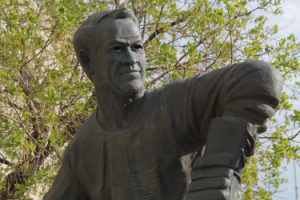
“Mr. Elbows” Statue, SaskTel Centre in SK
*$415 million CAD = $300 Million USD
We acknowledge that the land where the Gordie Howe International Bridge sits is Anishinaabe Territory. The Anishinaabe in the Windsor area are known as the Three Fires Confederacy which consists of the Ojibwe, Odawa and Potawatomi Nations. This land has also served as a place of refuge for the Huron/Wendat people.
References
- Butler, C. (2026, April 7). Canada’s busiest trade corridor has quietly moved north. CBCnews.
- https://www.cbc.ca/news/canada/gordie-howe-bridge-delays-truck-traffic-shifts-north-ambassador-tolls-9.7150543
- Canada Border Services Agency. (2026, July 24). Gordie Howe International Bridge Port of Entry. Government of Canada.
- https://www.canada.ca/en/border-services-agency/news/2026/07/gordie-howe-international-bridge-port-of-entry.html
- Campbell, T. Connecting nations — a timeline for the Gordie Howe Bridge Project. Windsor Star.
- https://windsorstar.com/news/local-news/connecting-nations-a-timeline-for-the-gordie-howe-bridge-project

by chirag





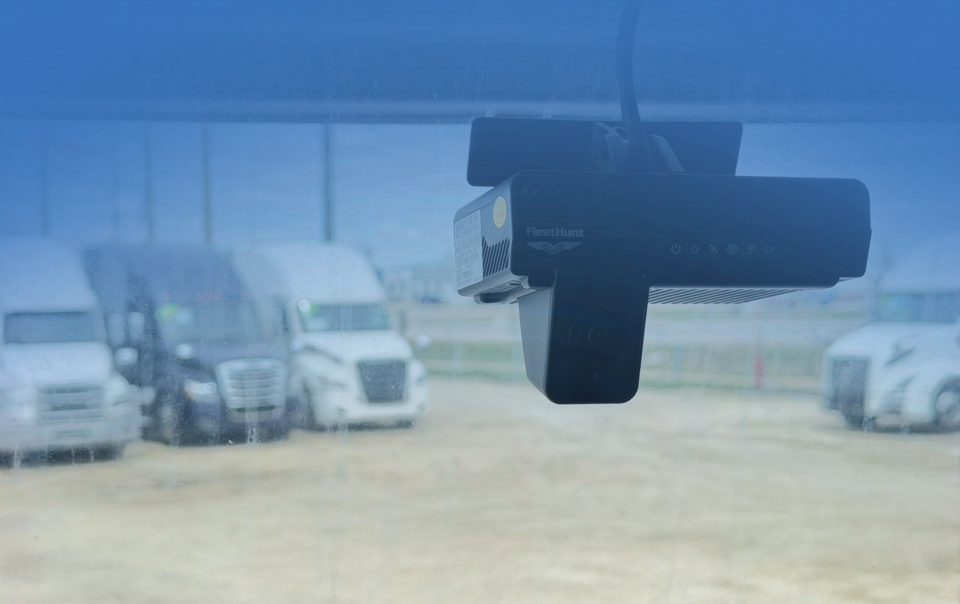
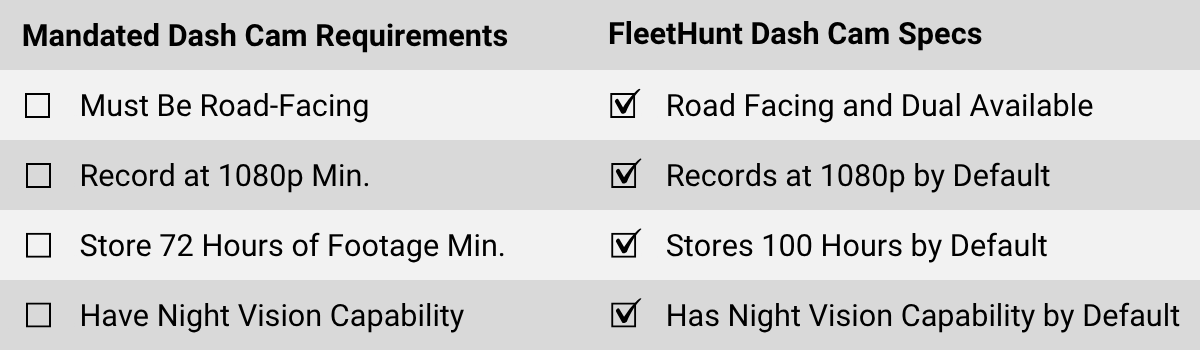

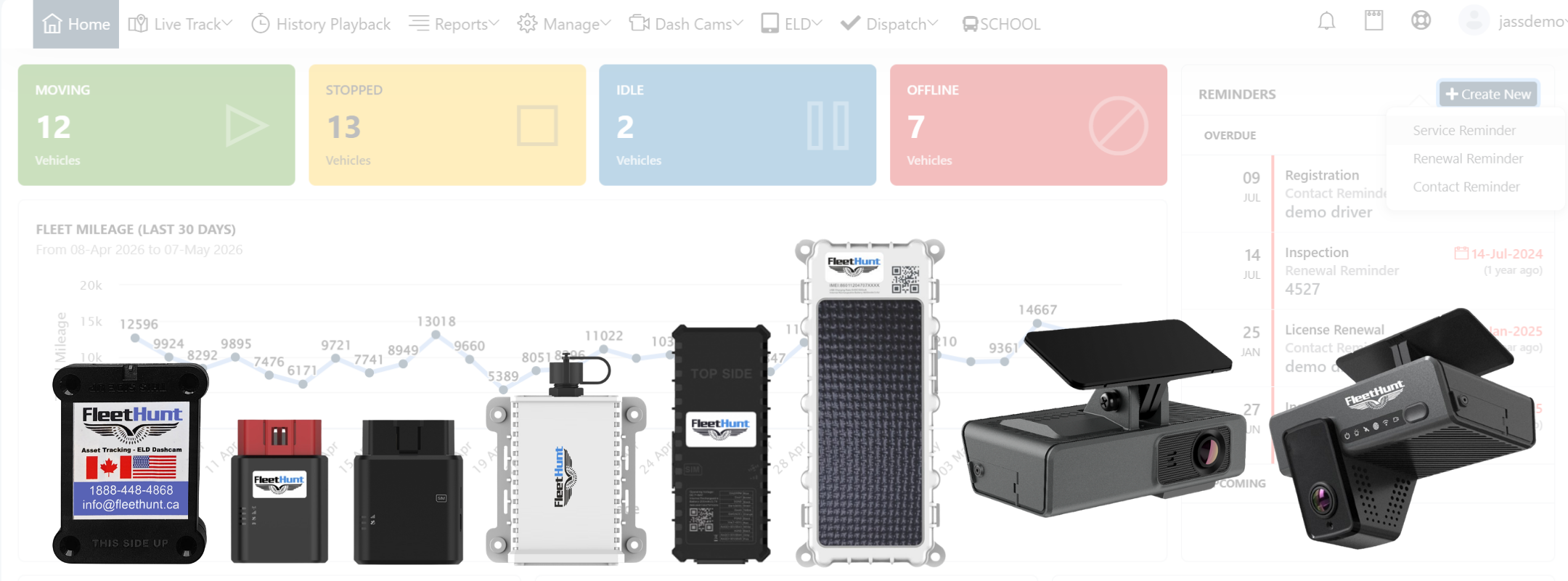





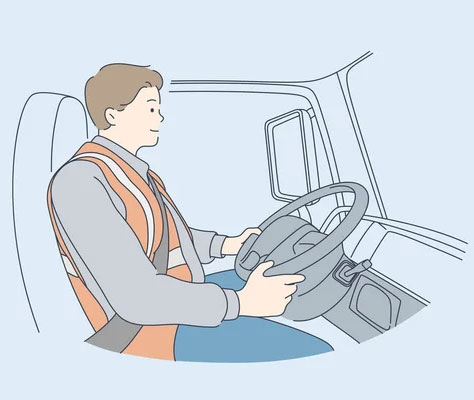 FleetHunt is more than a telematics system. It improves driver wellness by making every mile safer, less stressful, and more predictable. By combining AI dashboard cameras, Electronic Logging Devices, GPS, and asset tracking, it turns real-time data into clear insights on driving behaviour, hours of service, and vehicle health, including reminders that help fleets stay ahead of maintenance needs. Drivers stay alert, confident, and supported with fewer surprises on the road, while fleets reduce accidents, lower costs, and improve retention through earlier issue detection and clearer communication. Managers can act faster with reliable information instead of guesswork, enabling more proactive operations. In sum, telematics is more than fleet data management; it is helping your fleet’s drivers stay supported, confident, and prepared for every journey.